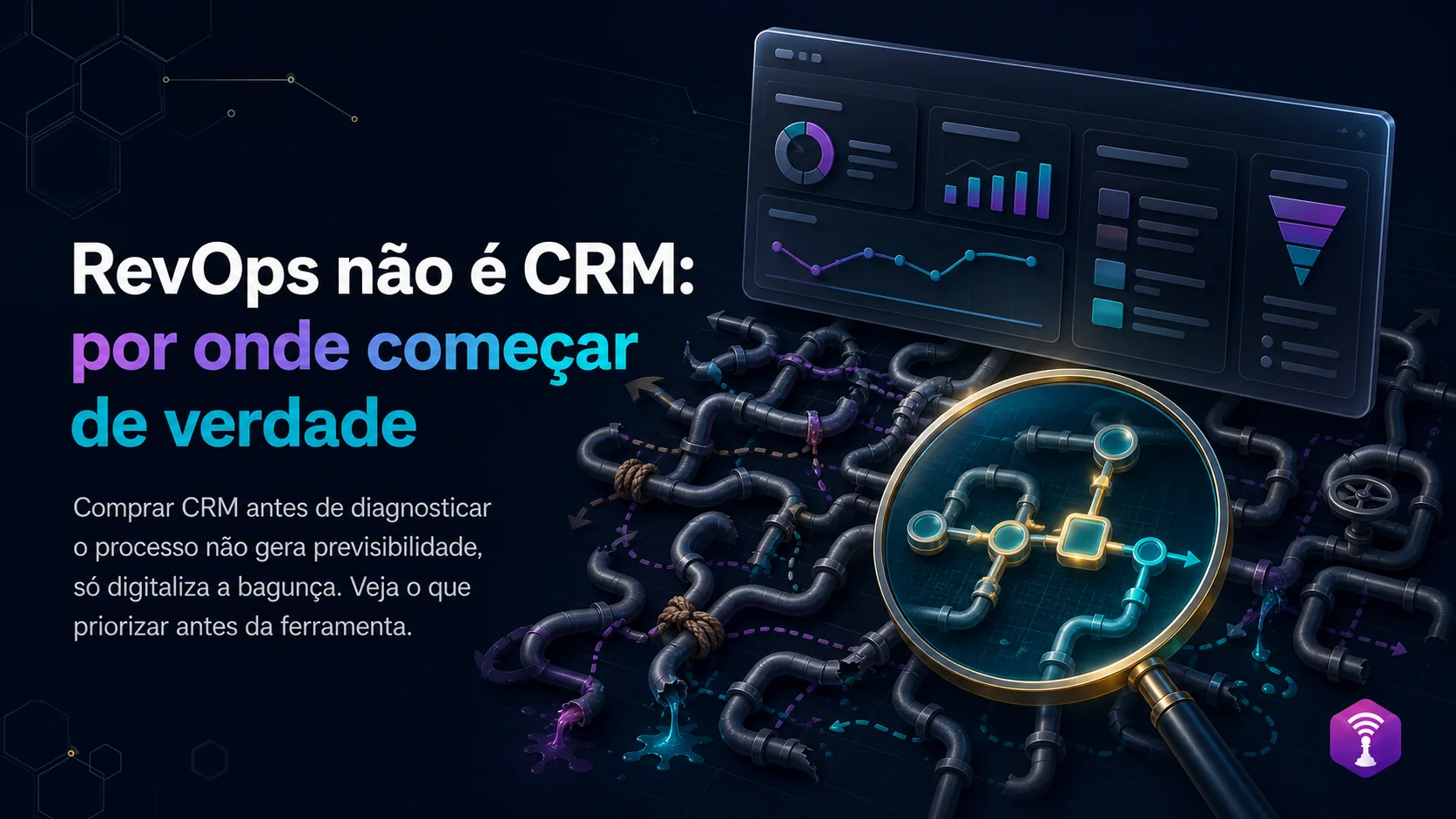
When a company buys a CRM before diagnosing its process, it doesn't buy predictability. It buys a pretty screen to watch the mess.
This is one of the most expensive mistakes I see in revenue operations. RevOps is not a CRM. But most people treat the two as synonyms. Leadership feels that the pipeline is messy, that marketing and sales disagree on lead quality, that reps only update the CRM right before the meeting, and that the forecast changes based on the mood of the week. The answer seems obvious. We need a better CRM.
Sometimes it really is necessary. That is almost never the first problem.
A CRM does not fix a broken sales process. It records the process that exists, with all its ambiguities, shortcuts, and fields filled out out of obligation. If the process is bad, the digital tool digitizes the noise. If the definitions are fragile, the dashboard only organizes the doubt.
RevOps is not against technology. RevOps is against starting with technology.
The wrong diagnosis: treating RevOps as a tool project
In many B2B companies, the conversation starts like this. “Let's implement HubSpot.” “Let's migrate to Salesforce.” “Let's switch Pipedrive because the team doesn't use it properly.”
Behind these words lies a genuine hope.
Gain control over acquisition, pipeline, forecast, and growth.
The problem is that the tool becomes an emotional shortcut to a more difficult conversation: how the company actually generates revenue.
RevOps isn't just about fixing the CRM.
Organizing the CRM can be part of the job, but that's not the whole job.
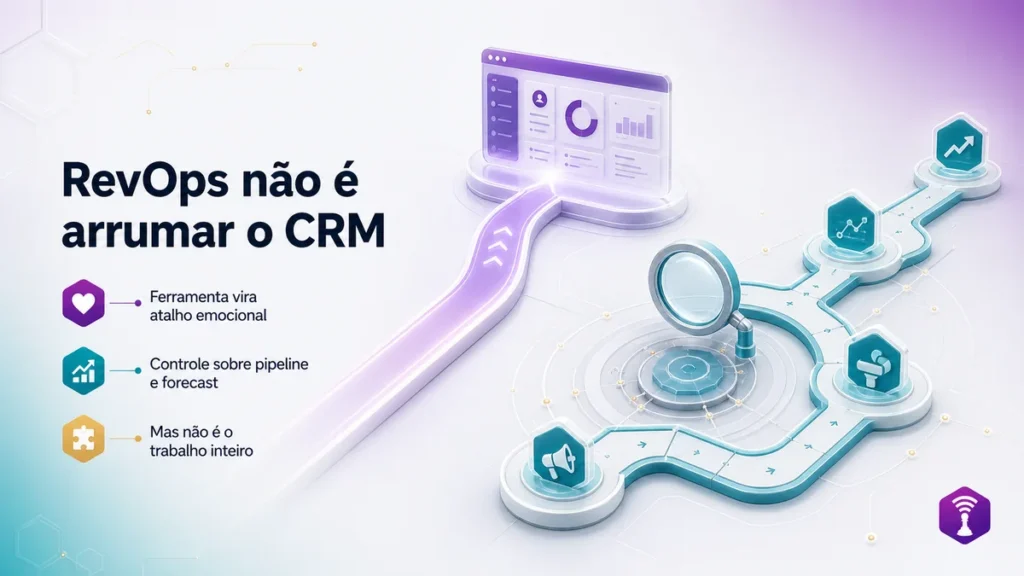
Revenue Operations is the discipline that aligns marketing, sales, customer success, finance, processes, data, and technology around a common revenue system.
The tool is infrastructure. The system is a different matter.
A tool partner usually starts with the setup.
- Objects
- Fields
- Permissions
- Automations
- Integrations
- Reports.
This works when The operational plan is already clear.
The problem arises when the company still doesn't know what a qualified lead, when an opportunity arises, Who is in charge of the baton pass?, which stages of the pipeline represent real progress.
Setting up the CRM too early creates a false sense of progress. The project is moving forward.
The problem remains.
Degasperi, Israel
The real reason: CRM records the process; it doesn't design it
A CRM is a type of operational memory. It helps you track relationships, organize activities, consolidate data, monitor opportunities, and generate reports.
But it doesn’t decide on its own what the company considers a good opportunity. It doesn’t resolve the dispute between marketing and sales over lead quality. It doesn’t define what needs to happen for a deal to move from assessment to proposal. It doesn’t turn low confidence into a reliable forecast.
Before we get into the technology, we need to establish some definitions. What is the actual ICP, not just the desired one? Which acquisition sources generate pipeline with a chance of closing? What distinguishes a lead, an MQL, an SQL, and an opportunity? What criteria trigger the handoff from marketing to sales? Which stages of the pipeline represent a tangible change in the buying process? Who is responsible for data quality?.
Without these answers, the implementation results in software that is a mess.
According to the report, between 55% and 75% of companies are not achieving the expected return on their CRM investment, according to the MIT Sloan Management Review.
But what I see on the field is different from that. The number isn't the result of a poor tool. It stems from a diagnosis that was never made.
In projects I've worked on, it's common to see companies with a full pipeline and unpredictable revenue. This isn't a layout problem. It's a process problem.
How to Tell If Your Operation Has This Problem
Some signs appear before any formal diagnosis is made.
The sales team disqualifies leads without consistently documenting the reason, and “no budget” has become a catch-all label for any lost lead.
Marketing tracks conversions down to MQLs, sales tracks opportunities created, and leadership wants closed revenue—with each department focusing on a partial truth.
The forecast is based on optimistic opinions expressed during a sales meeting, not on objective criteria for each stage.
No one can say, without opening a separate spreadsheet, how long it takes for an opportunity to move from one stage to the next.
And the CRM is a mess, but not because the tool is bad.
Porque ninguém definiu propriedade, obrigatoriedade, uso e consequência para cada campo.
Se dois ou três desses sinais soam familiares, o gargalo não está na plataforma.
O que fazer antes de escolher a ferramenta
O primeiro trabalho de RevOps não é perguntar qual ferramenta vocês usam. É entender como a receita flui, onde ela trava e onde a empresa está decidindo com base em dados pouco confiáveis
Um bom diagnóstico olha para aquisição e pipeline como um sistema só, não separa marketing, vendas e CS como se fossem ilhas. Acompanha o caminho completo.
Da origem da demanda ao fechamento, da promessa feita ao cliente à entrega, da primeira interação ao dado que aparece no forecast.
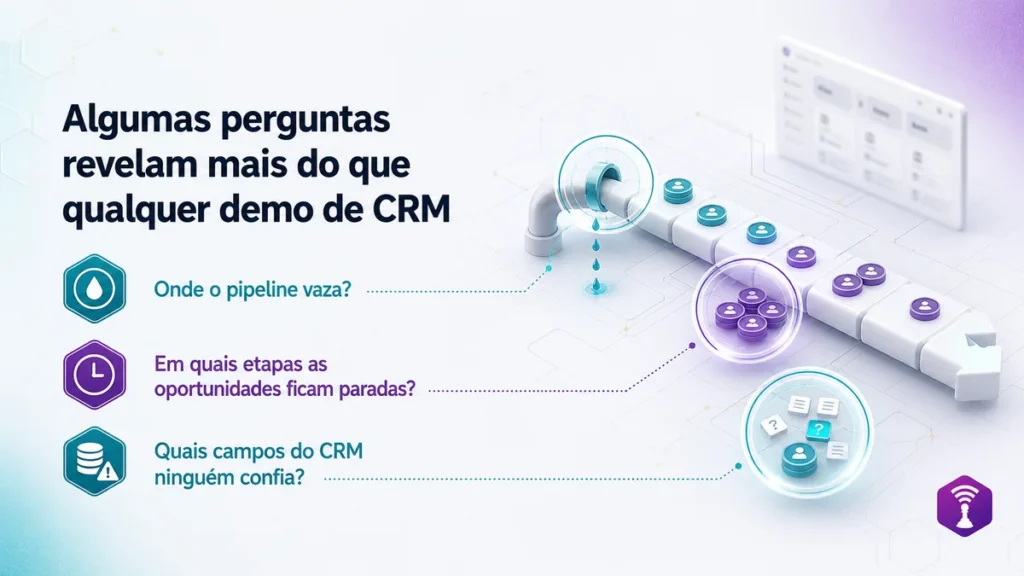
Algumas perguntas revelam mais do que qualquer demo de CRM. Onde o pipeline vaza. Em quais etapas as oportunidades ficam paradas. Quais canais geram volume, mas não geram receita.
Quais motivos de perda são reais e quais são desculpa padronizada. Onde marketing e vendas discordam sobre qualidade. Quais campos do CRM ninguém confia. Quais automações existem só para compensar desalinhamento humano.
Esse diagnóstico incomoda porque tira a discussão do campo confortável da ferramenta.
É mais fácil dizer que o CRM é ruim do que admitir que ninguém sabe quando uma oportunidade deve entrar no forecast.
É mais fácil pedir uma automação do que redesenhar o acordo entre SDR, vendedor e liderança.
Só depois que o processo tem forma é que a tecnologia entra como consequência, não como aposta.
Automações, integração entre marketing, vendas, CS e financeiro, modelos de atribuição, roteamento, campos obrigatórios. Automatizar o que está claro aumenta eficiência.
Automatizar o que está confuso aumenta ruído.
O padrão que aparece nos projetos
Uma empresa B2B com geração constante de leads. Marketing comemora volume. Vendas reclama que os leads são ruins.
A liderança vê pipeline crescendo no CRM, mas a receita não acompanha.
A solução proposta é implantar uma ferramenta melhor, com roteamento automático, lead scoring, IA para qualificar leads e dashboards mais sofisticados.”A implantação acontece. Os leads entram automaticamente. O roteamento fica mais rápido. Os relatórios ficam mais bonitos. O problema continua.
Por quê?
Porque o lead scoring foi criado com base em comportamento superficial, não em aderência ao ICP.
Porque a IA de qualificação foi treinada em cima desse mesmo histórico ruim, e repetiu o erro em escala maior e mais rápido.
Porque ninguém definiu o que conta como tentativa válida de contato dentro do SLA.
Porque vendas desqualifica sem registrar motivo de forma consistente.
Cada área segue olhando para uma verdade parcial, agora só mais rápido.
Nesses casos, o diagnóstico que precede a ferramenta costuma revisar ICP, qualidade por canal, critérios de qualificação, taxa de conversão por etapa, tempo de resposta, motivos de descarte e disciplina de atualização.
Só depois disso fica claro se o problema é a plataforma ou a definição de oportunidade que nunca existiu.
Tecnologia boa responde melhor quando a pergunta é boa.
Degasperi, Israel
Se a empresa quer previsibilidade, precisa olhar para o pipeline como sistema vivo.
Aquisição não termina no lead.
Pipeline não começa na oportunidade criada. Receita não é responsabilidade isolada de vendas. Em uma empresa madura, o CRM é reflexo desse desenho.
Em uma empresa imatura, o CRM vira esconderijo da falta de desenho.
O seu CRM está mostrando o sistema de receita da sua empresa, ou está escondendo que ele nunca foi desenhado?
Se você se identifica ou está passando por este momento na sua empresa, o Radar de Growth é um diagnóstico gratuito que mapeia onde sua aquisição, CRM e pipeline estão perdendo eficiência.